Railroad Records
A Birthday, a Ferry, and an Unexpected Discovery
An obscure railroad publication reveals an important date in the Binghamton's early history — and a coincidence that makes the discovery unexpectedly personal.
When you're researching the history of a vessel built in 1905, you quickly discover that some of the simplest questions are surprisingly difficult to answer.
Take dates, for example.
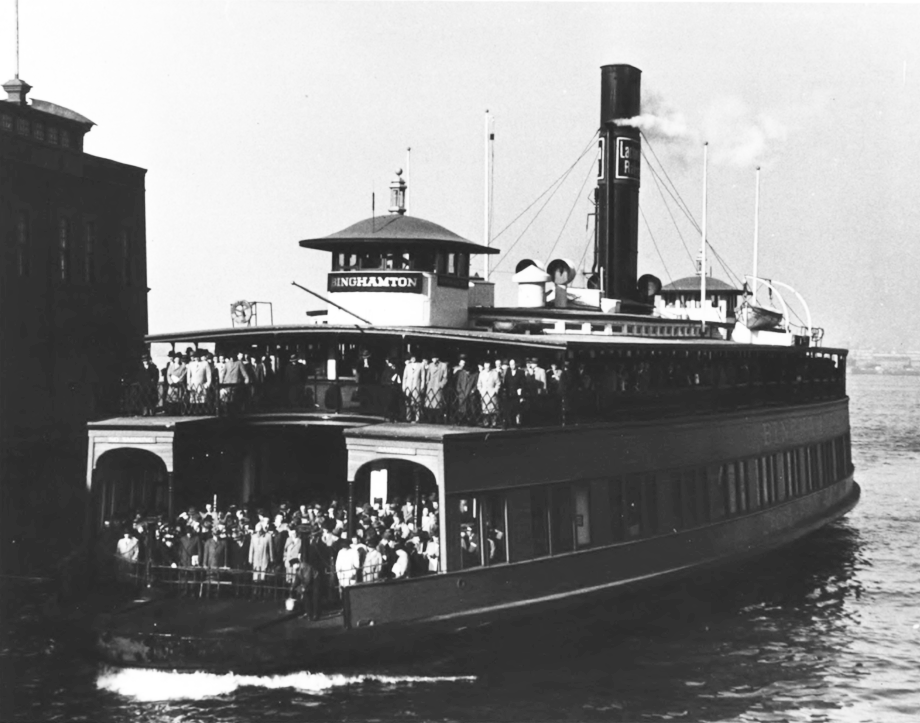
I knew the Binghamton had been built in 1905 for the Delaware, Lackawanna & Western Railroad. But establishing exactly when she arrived in Hoboken, when she entered service, and where she began her working life proved considerably more challenging.
Newspaper archives provided pieces of the story. Historical accounts offered others. But finding precise dates, especially ones supported by contemporary railroad records, was another matter entirely.
And then, while looking at the website of a North Jersey historical society, I came across a book title called The Romance of the Hoboken Ferry.
I immediately started scouring the internet to learn more about it, and hopefully find a copy I could buy. I learned that the book was published in 1931 by the Delaware, Lackawanna & Western Railroad and it was, let's just say, hardly a bestseller. It was a specialized publication produced by the railroad, primarily for people connected with its operations.
Nearly a century later, tracking down copies is difficult to say the least.
After looking at all the usual places and finding nothing, I got lucky. I found exactly one copy of it on AbeBooks, and I happily hit the "ORDER" button quickly.
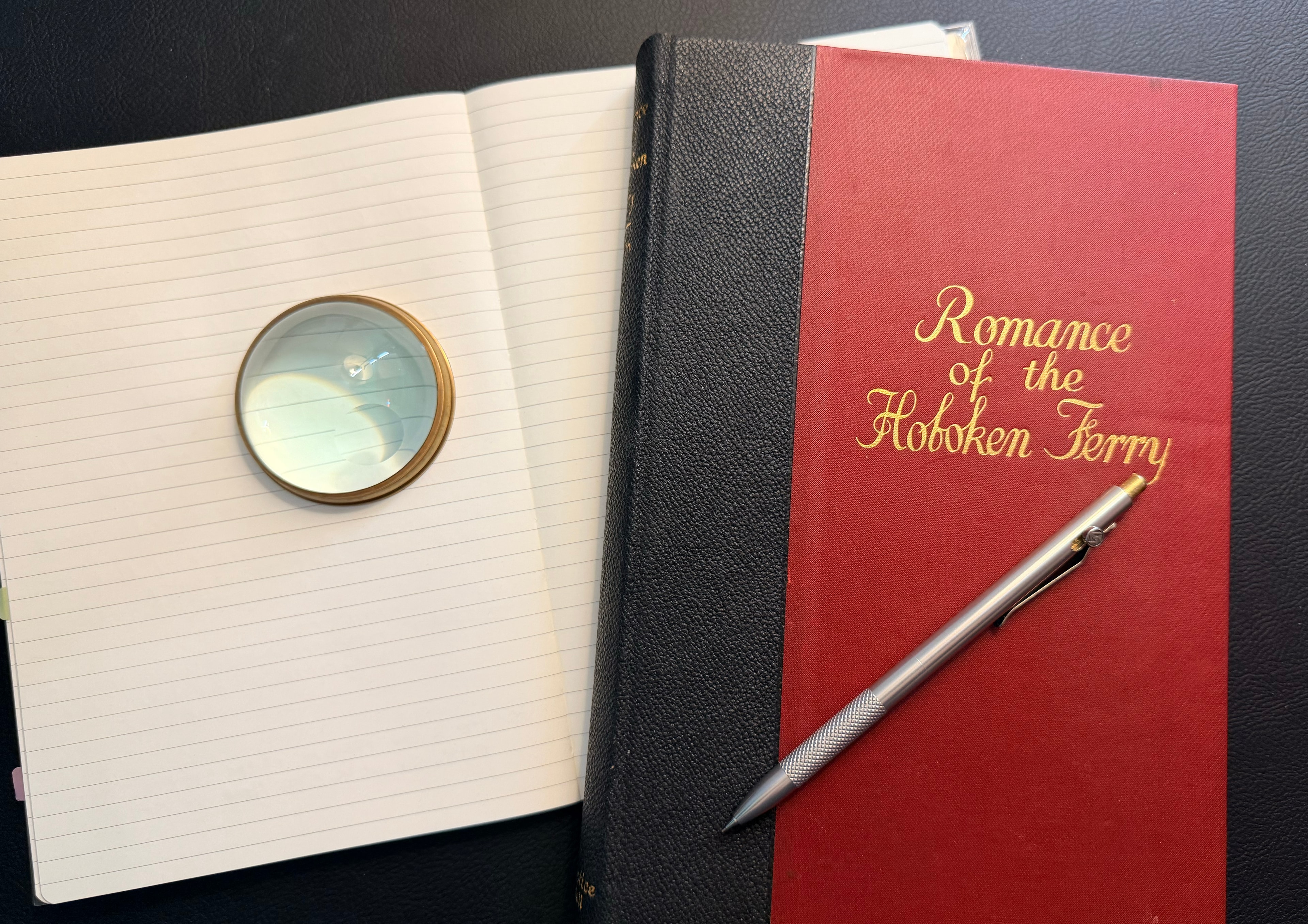
Then it dawned on me that I knew very little about what was actually inside this book. Would it contain anything useful about the Binghamton? Would it answer any of my questions? Or would I end up with an interesting but largely irrelevant addition to my growing collection of historical material?
When the book arrived, I discovered something unexpected before I'd even opened it.
The bookseller had included a handwritten note asking how I had known the book existed in the first place. Apparently, even HE was surprised that someone had come looking for it.
I had to laugh. At that point, I was beginning to wonder the same thing myself.
As I began reading, I realized I'd stumbled onto something considerably more valuable than I'd anticipated.
The book contained photographs, historical details, information about the railroad's ferry operations, and even the cost of constructing the Binghamton.
But one particular detail immediately caught my attention.
According to the railroad's own account, the Binghamton was received at its Fourteenth Street shops in Hoboken on March 26, 1905.
That was the date I'd been trying to establish. It was also a date that is very familiar to me.
March 26 is my birthday. Not 1905, obviously. I arrived 68 years later. But of all the dates in the calendar, the Binghamton had arrived in Hoboken on the very same day I would eventually be born.
Now, I'm not suggesting there was anything mystical about this coincidence. The Binghamton and I simply happen to share a date on the calendar.
But after spending so much time trying to piece together the vessel's history, finding that particular detail in an obscure book I'd purchased almost on a whim was a delightful surprise.
It was also a reminder of why I enjoy historical research so much. You begin with a question. You follow one lead, then another. Sometimes you spend hours searching and come away with absolutely nothing. Other times, something you weren't even looking for turns out to be the most interesting discovery of the day.
In this case, a nearly century-old railroad publication answered several important questions about the Binghamton's earliest days, and it gave me a birthday connection I certainly hadn't expected.
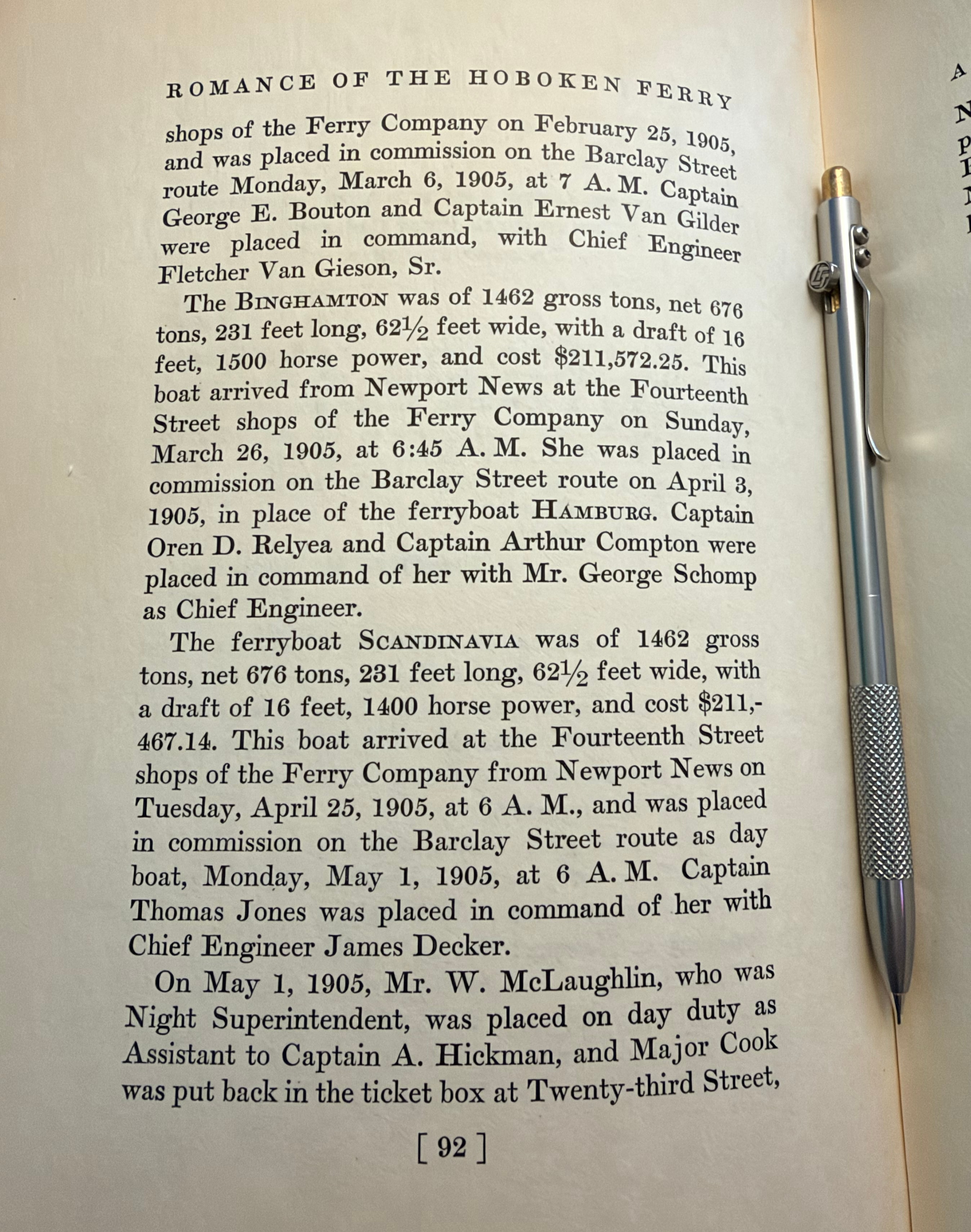
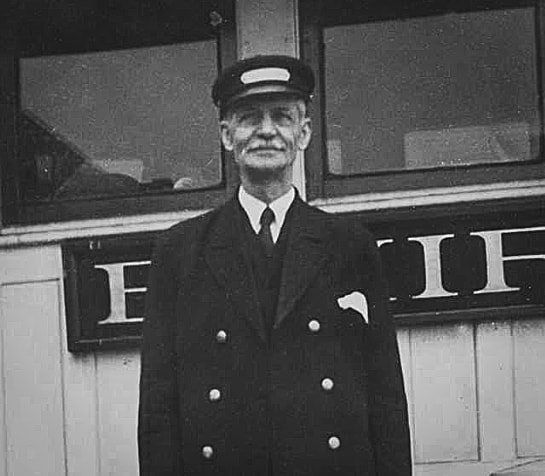
The book had more surprises waiting for me, too. Among its pages were several references to Captain Oren D. Relyea, who was the Binghamton's captain on her very first trip across the Hudson River.
At the time, I knew very little about him. Even locating a single photograph had proved difficult.
But those references would lead me to discover the story of an experienced mariner who had devoted years of his life to the railroad, earning a reputation as a steady, dependable captain. He commanded the Binghamton during part of her working life, navigating the busy waters of the Hudson River with little of the drama that would come to define the vessel's later years.
That's one of the fascinating things about researching history: sometimes the answer to one question becomes the beginning of an entirely different story.
Continue exploring: Finding Captain Relyea